We spend a lot of time reacting — trying to guide behavior in the moment. And over time, it can start to feel like we're always saying "no." Not because we want to. But because we don't always have a better system.
What Kids Actually Respond To
Kids don't just respond to rules. They respond to feeling seen, making progress, and being recognized. They want to feel like they're doing well — not just being corrected.
And when that feeling is missing, everything becomes harder. More resistance. More conflict. Less motivation to try.
"What if instead of catching kids doing something wrong, we caught them doing something right?"
That simple shift — from correction to recognition — changes the entire dynamic of a family.
What I Noticed With My Grandchildren
🐻🐼
When my grandchildren started using this system, something unexpected happened. It leveled the playing field.
Instead of competing or arguing, they were working toward the same kinds of goals, thinking about their behavior in similar ways, and talking about what they did well that day.
It became less about "Who's in trouble?" and more about "What did you do well today?"
They started to feel like a team.
Turning Daily Behavior Into Something Positive
At the end of each day, they check in. They reflect on what they did. They earn KindCoins. And those points can turn into anything a family chooses — a pizza night, an ice cream outing, a playdate with a friend, or something they're all working toward together.
The reward isn't just the "thing." It's the sense of progress. The feeling of: I worked toward something and I got there. That feeling — earned, not given — is what builds confidence.
See it in action
How KindCoin helps families say "yes" more often
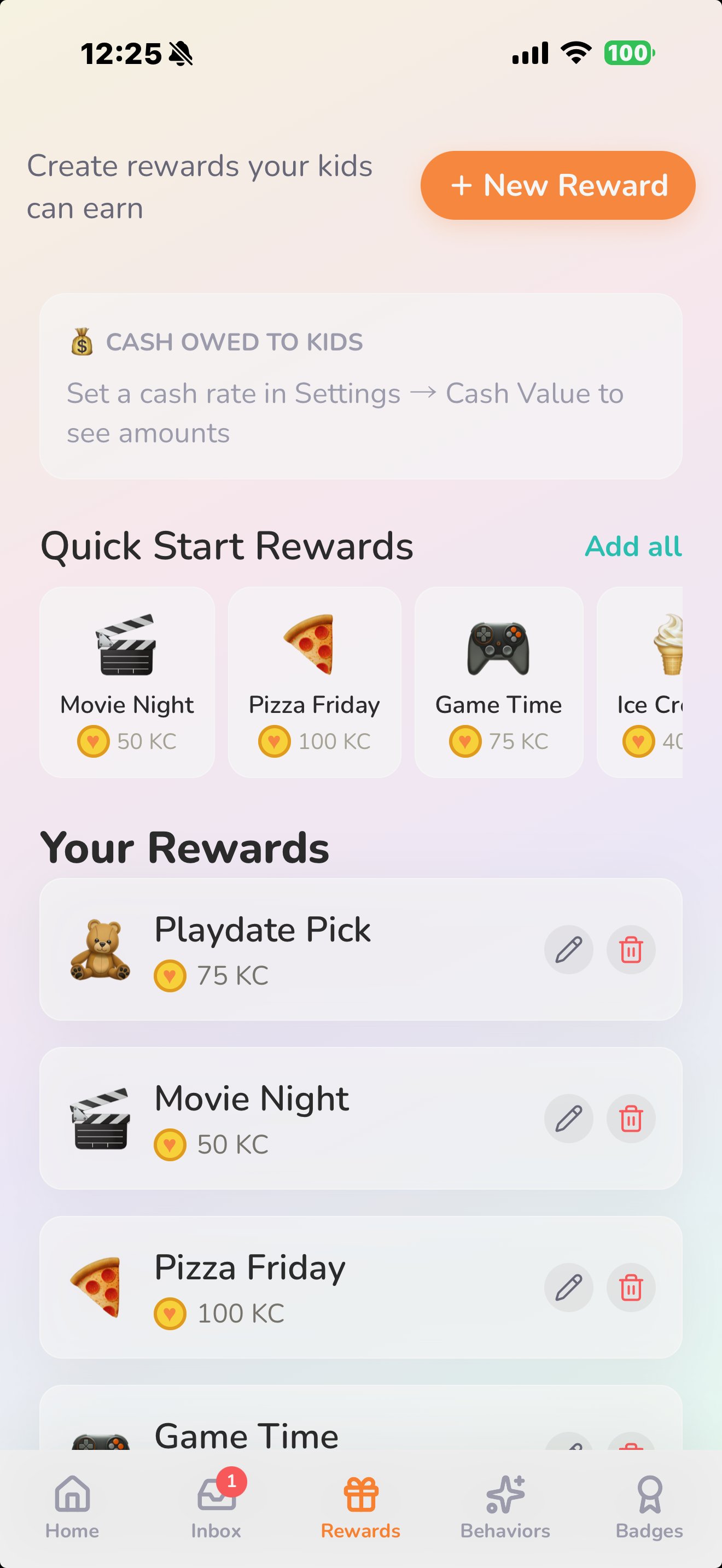
Rewards kids actually care about
Parents create the rewards that make sense for their family. A Playdate Pick. Movie Night. Pizza Friday. Game Time. Ice Cream run.
Kids can see exactly what they're working toward — and exactly how many KindCoins they need to get there. That clarity is motivating in a way that vague praise never is.
The reward becomes a goal. And working toward a goal builds the habit of persistence — one of the most valuable things a child can learn.
🎁 Kids set their own savings goals
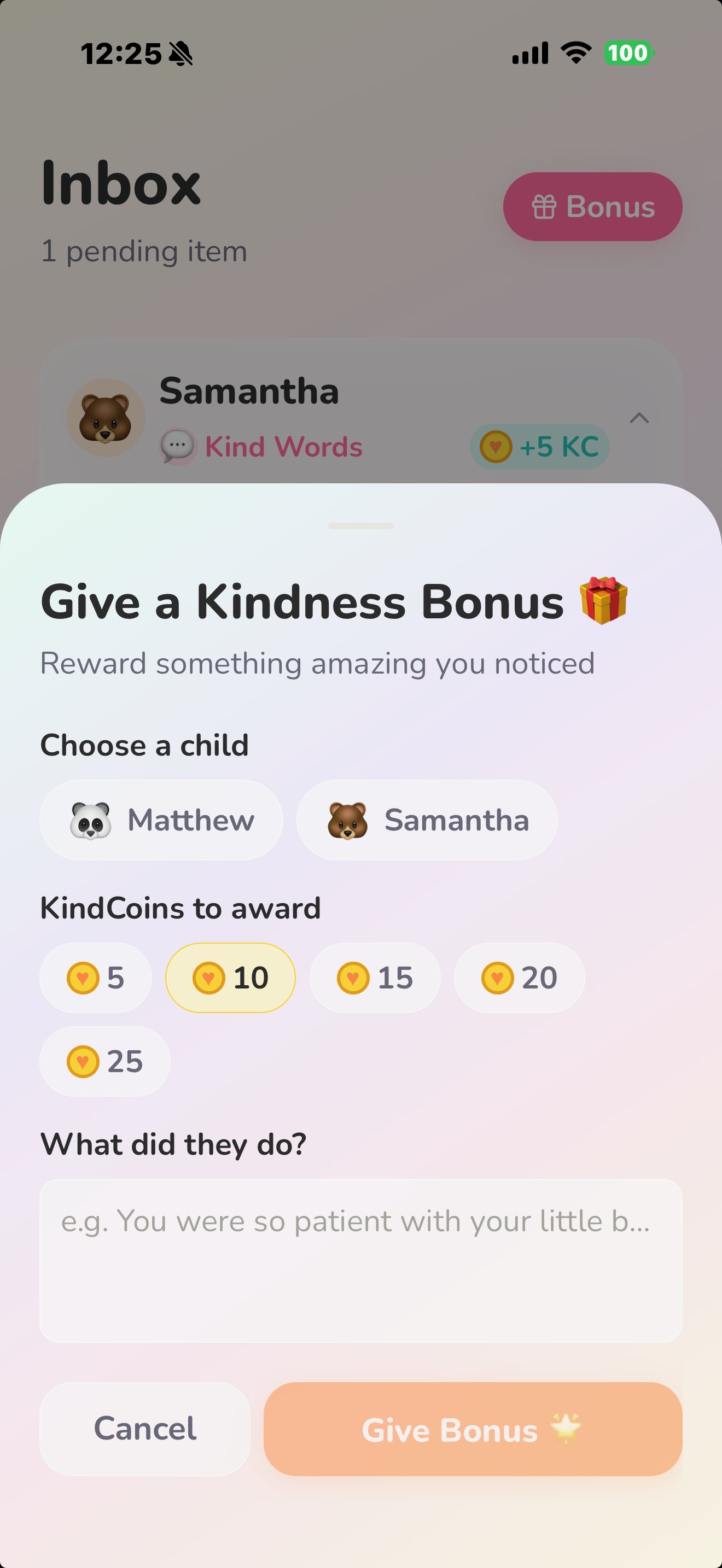
Catch them doing something right — instantly
The Kindness Bonus is one of the most powerful features in KindCoin. When you notice something remarkable — your child helping without being asked, comforting a sibling, showing patience — you can reward it on the spot.
You choose the child, the KindCoins, and write a personal note: "You were so patient with your brother today. I noticed and I'm proud of you."
That note lands in their account like a message from you. Not a correction. Not a reminder. A moment of pure recognition — for being exactly who you want them to be.
⭐ Spontaneous recognition that sticks
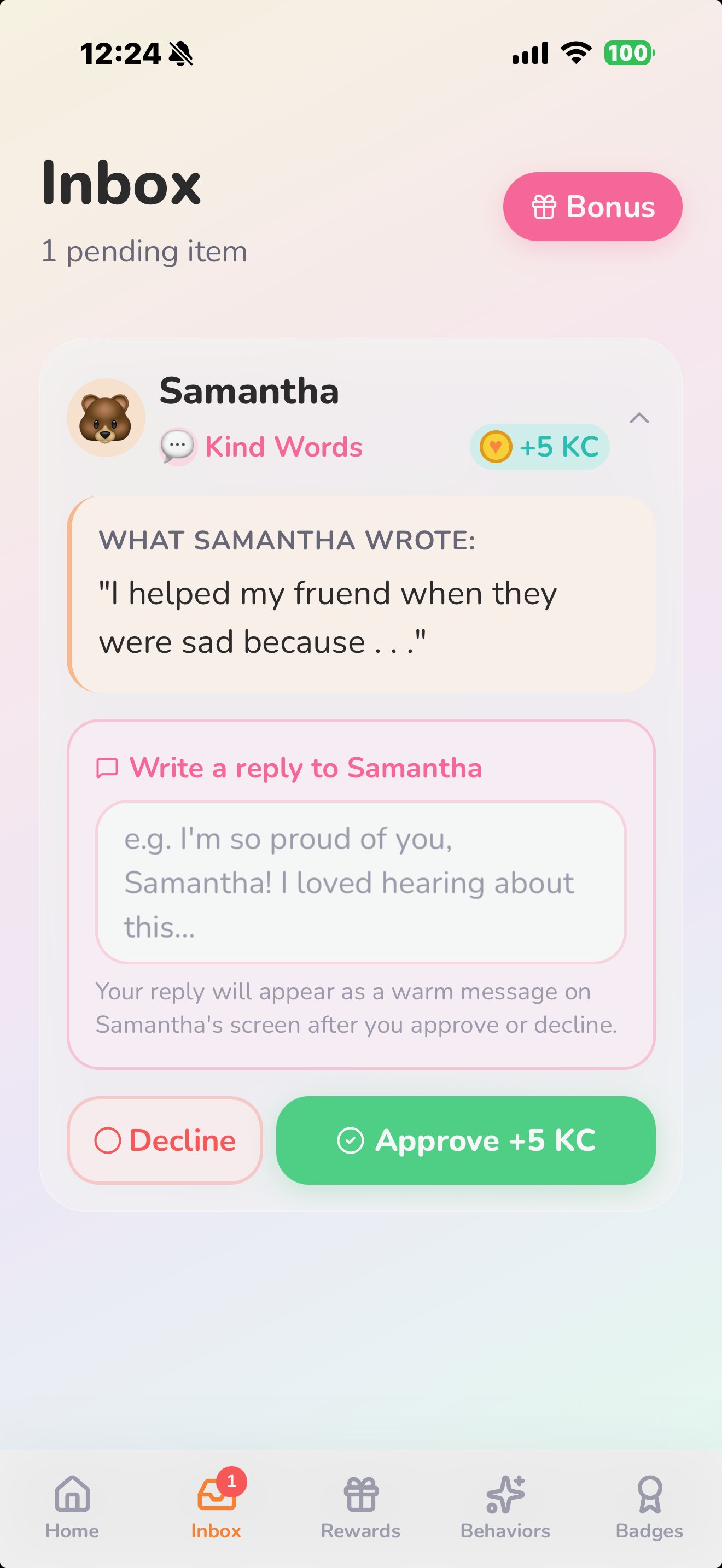
Read what they wrote — and write back
Every check-in lands in your inbox as a reflection in your child's own words. Samantha wrote: "I helped my friend when they were sad."
You read it. You write back. You approve their KindCoins. That moment of being seen and recognized by someone they love — that's what turns a good day into a good habit.
Instead of asking "How was your day?" and getting "Fine" — you already know. And you have something real to talk about.
💛 Recognition that actually lands
A Shift for Parents Too
One of the biggest surprises? It changes how you feel as a parent. Instead of always reacting, you start noticing — what went right, what improved, what's worth reinforcing. You start looking for the good instead of waiting for the problem.
It creates more moments where you can say: "That was really kind." "I saw what you did there." And those moments — small as they are — matter enormously to a child.
Even as Adults, We're Still Learning
The truth is — good habits are hard for everyone, not just kids. This kind of system doesn't just help children. It helps parents stay intentional. It helps families slow down. It creates better conversations.
In a way, it keeps all of us a little more accountable — to each other, and to the kind of family we want to be.
When kindness becomes something you practice together — kids feel more capable, parents feel more connected, and families feel more aligned.
It stops being about constant correction. And starts becoming something you build — together.
That's the shift KindCoin makes possible. One check-in, one reflection, one "I'm proud of you" at a time.