💛 KindCoin Blog

How to Build Kindness Habits in Kids (Not Just a Lesson)

 ·  5 min read  ·  Emotional Habits

Every parent wants their child to be kind. To share. To include others. To be the kind of person others want to be around.

But in real life, it's not that simple. You remind them to be nice. You model good behavior. And then… they still grab the toy, snap at their sibling, or have a meltdown over something small.

It's frustrating — not because they're bad kids, but because kindness doesn't seem to stick.

The Problem: Kindness Isn't a One-Time Lesson

We often treat kindness like something we can teach once. Say the right words. Explain the right values. Correct the behavior in the moment. But kindness doesn't work like that. It's not a rule. It's a habit.

"Habits aren't built through reminders — they're built through repetition."

And that's the gap most families fall into. We focus on the moment of misbehavior instead of building the daily practice that makes kindness second nature.

The Shift: From Teaching to Practicing

Think about brushing teeth. You don't explain it once and expect it to stick. You make it part of a routine. You reinforce it daily. Over time, it becomes automatic — not because you nagged, but because it became a habit.

Kindness works exactly the same way. Kids need small, repeatable moments where they:

That cycle — notice, reflect, repeat — is how good habits are formed. Not through pressure. Through awareness and practice.

What This Looks Like in Real Life

Every child is different — and so is every moment. The last thing a child needs when they're upset is a frustrated parent or a therapy session. They can't hear it. They're not ready.

What works better is kindness first. When your child is struggling, respond with calm. Meet them where they are. That itself is modeling — they're watching how you handle hard moments just as much as they're listening to what you say.

Then later, when they're happy and regulated — when the storm has passed — that's when you create the opening. Not a big confrontation. Just a gentle moment: "Hey, what happened back there? You think you could do better next time?"

That's it. Short. Kind. No pressure. And because they're calm, they can actually hear it. They can reason. They can reflect. And that reflection — however small — is what builds the habit over time.

With preteens and teens especially, this approach doesn't just teach kindness — it saves the relationship.

Why We Built KindCoin

💛

We built KindCoin with that habit-building opportunity in mind.

I wanted to give my grandchildren a chance to practice kindness every day — and to become more aware of what it means to grow into a kind leader. Not just smart. Not just successful. Kind.

Our children develop intellectually from a very early age. We track their grades, celebrate their achievements, cheer them on in sports. But do they also develop emotionally? Do we give them the same daily practice, the same recognition, the same opportunity to grow in kindness, empathy, and self-awareness?

With busy parents working full time, it becomes harder and harder to create that space. The evenings are rushed. The weekends are full. The quiet moments where those conversations could happen — they slip by.

KindCoin was built to create that space. A few minutes a day. A check-in. A reflection in their own words. A parent reading what their child wrote and writing back. Small moments — but the kind that add up to something lasting.

Because kindness doesn't need a big lesson. It needs a little practice. Every single day.
See it in action

How KindCoin turns kindness into a daily habit

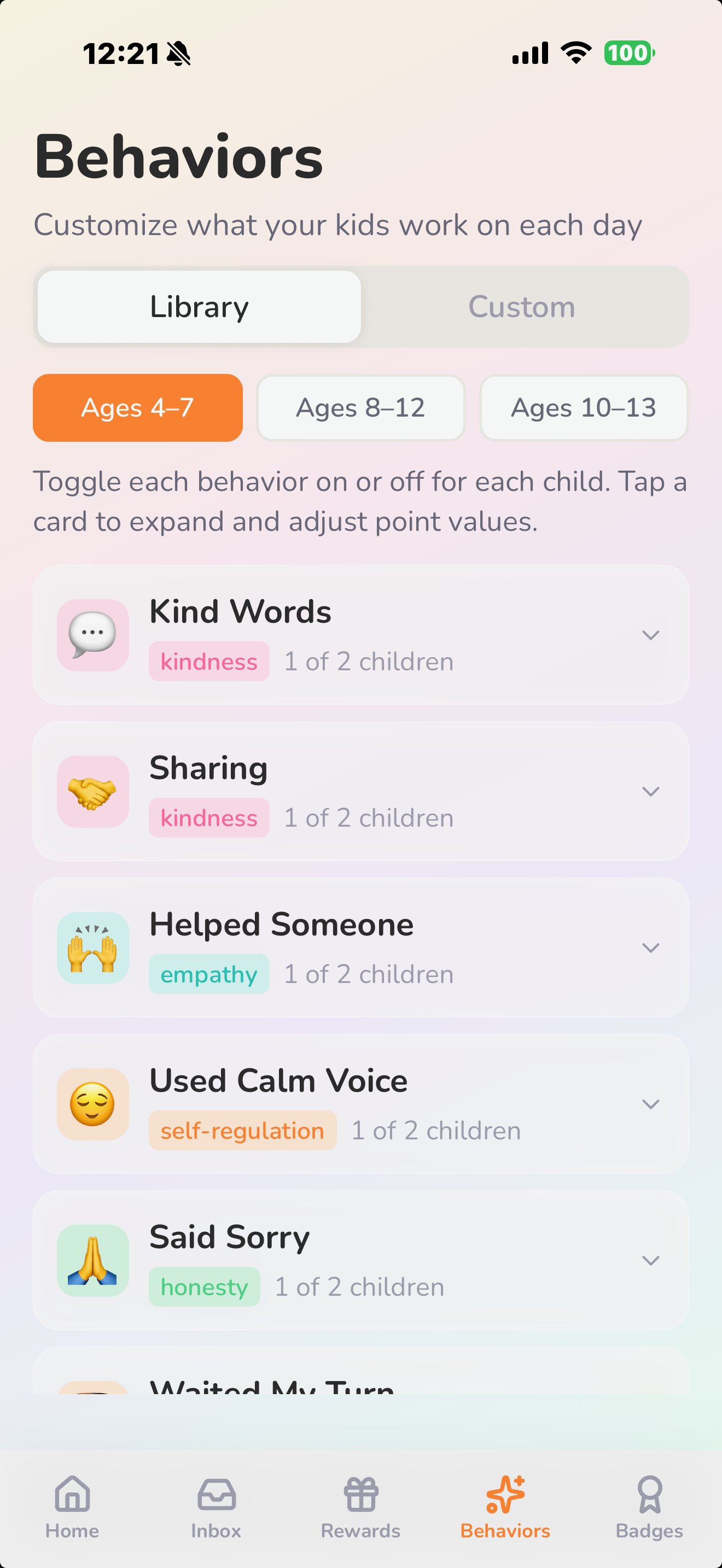
KindCoin behavior library showing kindness missions parents can assign to kids
1

Parents choose the habits that matter most

Pick from a library of age-appropriate habits — Kind Words, Sharing, Helped Someone, Used Calm Voice, Said Sorry. Assign them to each child individually. Add your own. Adjust point values to match your family's priorities right now.

It takes five minutes to set up. And it reflects your family's values — not a generic list.

⚙️ Takes 5 minutes to set up
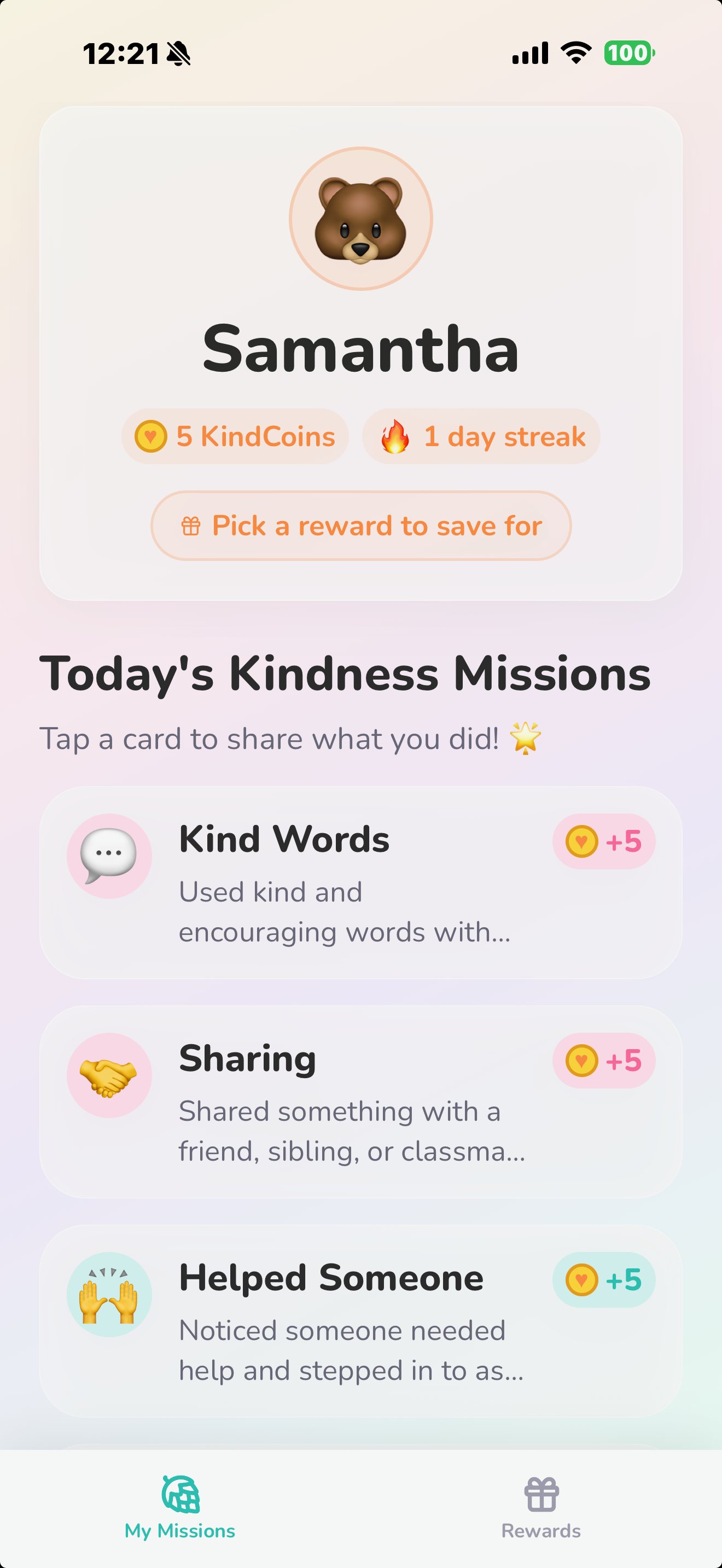
Samantha's KindCoin home screen showing her kindness missions for today
2

Kids check in daily — and feel proud doing it

Each day, your child sees their personal kindness missions. When they've practiced one — Kind Words, Sharing, Helping Someone — they tap the card to check in.

They earn KindCoins, build streaks, and work toward rewards they actually care about. The app becomes something they look forward to — not a chore.

⭐ 2 minutes a day
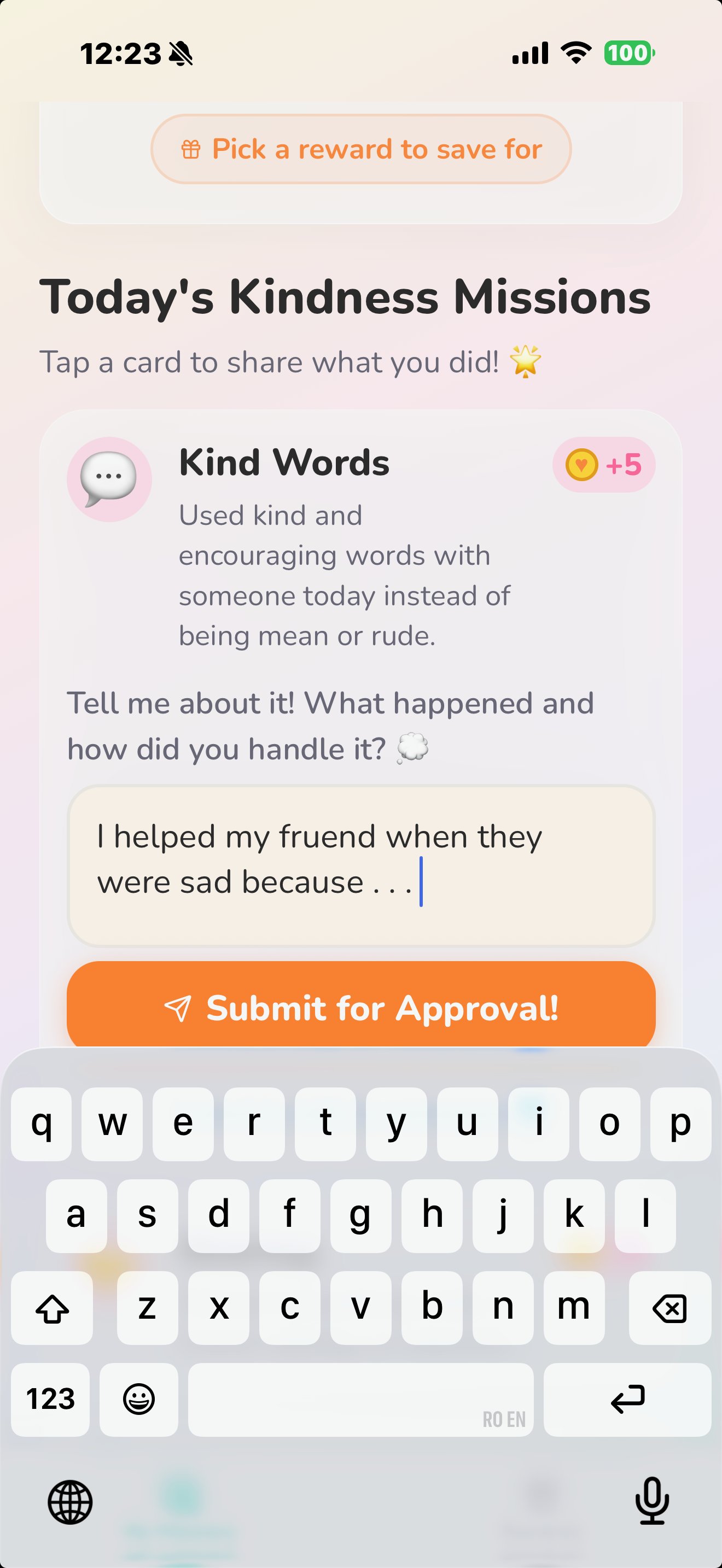
KindCoin reflection screen where a child writes about what they did and how they handled it
3

They tell you about it — and that's where the magic is

Before submitting, every child writes a short reflection: "Tell me about it. What happened and how did you handle it?"

Kids love this part. They want to share what they did. They want to be seen for it. When a parent or grandparent reads that reflection and writes back — that moment of recognition is what makes the habit stick.

It's not just an app interaction. It's a daily conversation about who your child is becoming.

💬 Opens conversations you'd never have otherwise
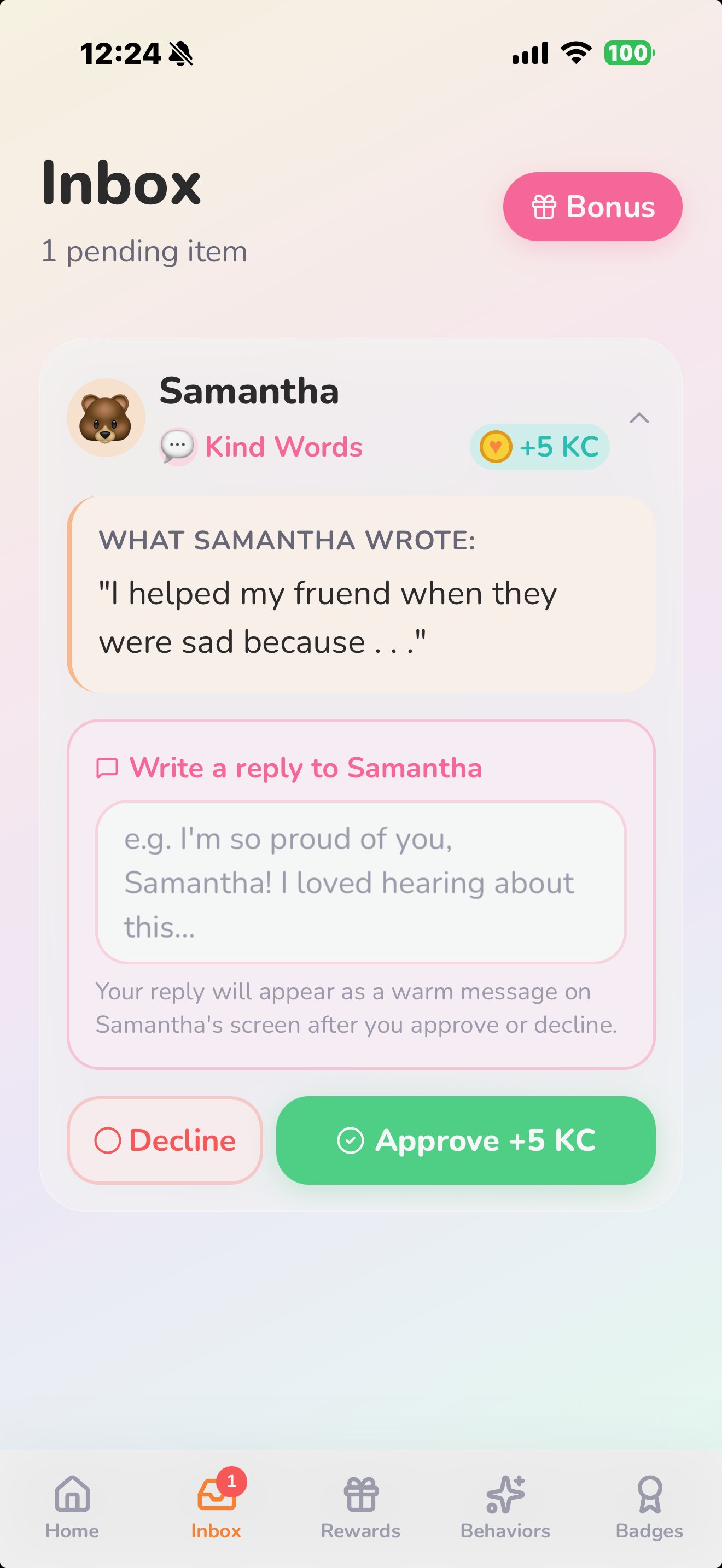
Parent inbox showing Samantha reflection and reply field
4

The conversation that makes it all real

After a child submits, it lands in the parent's inbox. You read what they wrote — in their own words. "I helped my friend when they were sad." You write back. You approve their KindCoins.

That exchange — a child sharing something good they did, and a parent saying "I see you, I'm proud of you" — is the moment that makes the habit stick.

It's not just an app notification. It's a private daily conversation between you and your child about who they're becoming.

⭐ Recognition that actually lands

The Habit That Changes Everything

After a few weeks of daily check-ins and reflections, something shifts. Kids start noticing their own behavior throughout the day — not just when they open the app. They start thinking: "Was that kind? Could I do better? What will I write tonight?"

And here's what makes it really work: they want to tell someone. They want to share what they did. They want to be seen for it. When a child submits their reflection and a parent writes back — "I'm so proud of you for that" — it doesn't just feel good. It becomes part of who they are.

That's the real reward. Not the KindCoins. Not the badges. The moment a child realizes: I am someone who is kind. I am someone who helps. I am someone who tries.

Build that feeling — consistently, daily, with recognition — and the good habits follow naturally.

Join founding families on TestFlight

Enter your email and we'll send you the TestFlight link. Free for founding families through beta and 6 months after.

Become a Founding Family →

First time using TestFlight? You'll see two steps on Apple's page. Step 1: install Apple's free TestFlight app (only takes a minute). Step 2: come back and tap "View in TestFlight" to add KindCoin to your phone.

iPhone, iOS 16+. No spam, ever.

Learn more about how KindCoin works →

More from the blog

More thoughts on raising kinder kids

Family

How a Common Goal Stopped Kids from Fighting

One week after starting KindCoin, my granddaughter texted me: "Today was amazing no fights." Here's what changed.

Read more →
Family

Catch Kids Doing Something Right

When you start catching kids doing something right instead of correcting what's wrong, the whole dynamic shifts.

Read more →
Parenting

How to Get Kids to Listen Without Nagging

When you shift from consequences to possibilities, everything changes. Here's how to get off the nagging merry-go-round.

Read more →
Emotional Habits

The One Question That Beats "How Was Your Day?"

"How was your day?" almost always gets "fine." Here's the one small question that opens kids up instead.

Read more →